
Subsidence is a serious issue for property owners. When the ground beneath a building shifts, foundations can crack, sink, or become unstable. Fixing it quickly and correctly is essential to protect safety, stability, and value.
Two of the most common solutions are resin injection underpinning and concrete underpinning. Both methods stabilise foundations, but they work in very different ways. This guide explains how each method works, compares their pros and cons, and helps you decide which is best, whether for your home, a warehouse, or even a large commercial site.
What is Resin Injection Underpinning?
Resin injection underpinning is a modern, innovative solution for stabilising foundations. It has become increasingly popular as an alternative to traditional underpinning because it is faster, cleaner, and often more cost-effective.
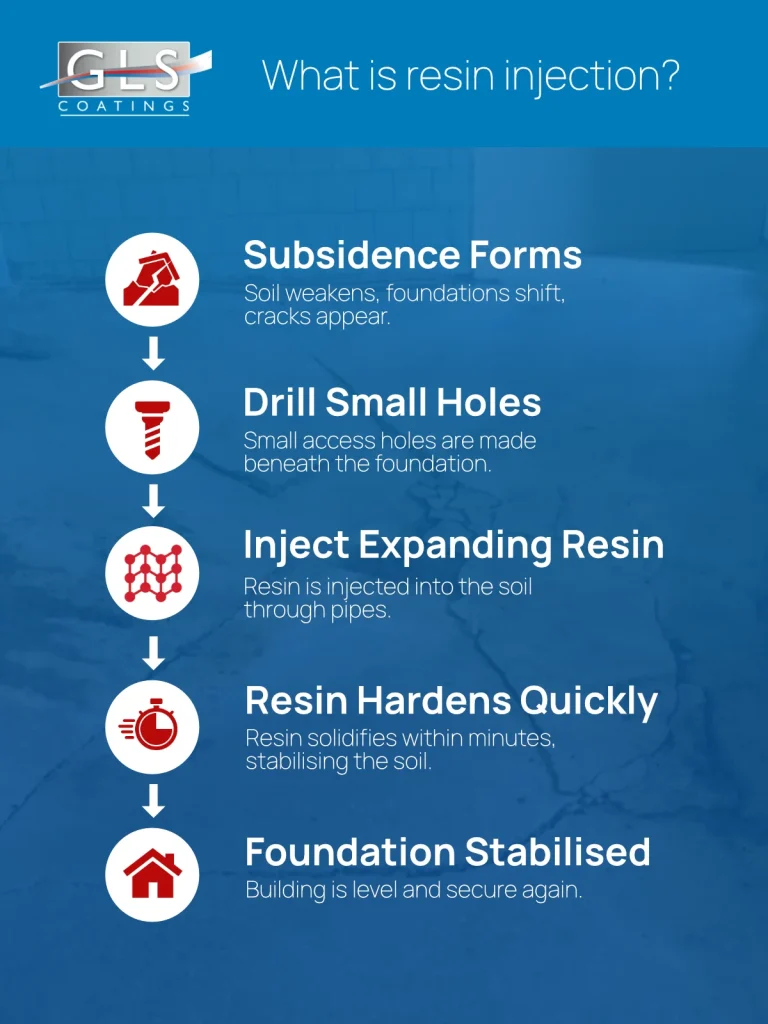
How it works:
- Small holes are drilled under or around the foundation.
- A specially formulated expanding resin is injected into the ground.
- The resin fills voids, compacts the soil, and hardens quickly.
- This strengthens the ground and re-supports the foundation almost immediately.
When it’s typically used:
- Homes with shallow or moderate subsidence.
- Commercial buildings where downtime must be kept to a minimum.
- Large industrial spaces such as warehouses or factories where excavation would cause disruption – often solved with concrete lifting.
Advantages:
- Fast, often completed within a day.
- Minimal disruption, with buildings usually remaining usable during works.
- Cost-effective for minor to moderate issues.
- Environmentally friendly, requiring less material and equipment.
Limitations:
- Not always suitable for very deep or severe subsidence.
- Less long-term history compared to concrete underpinning, though it has decades of proven success.
What is Concrete Underpinning?
Concrete underpinning is a traditional method of strengthening a building’s foundations. It is best suited to the most severe cases of subsidence or when supporting extremely heavy structures.
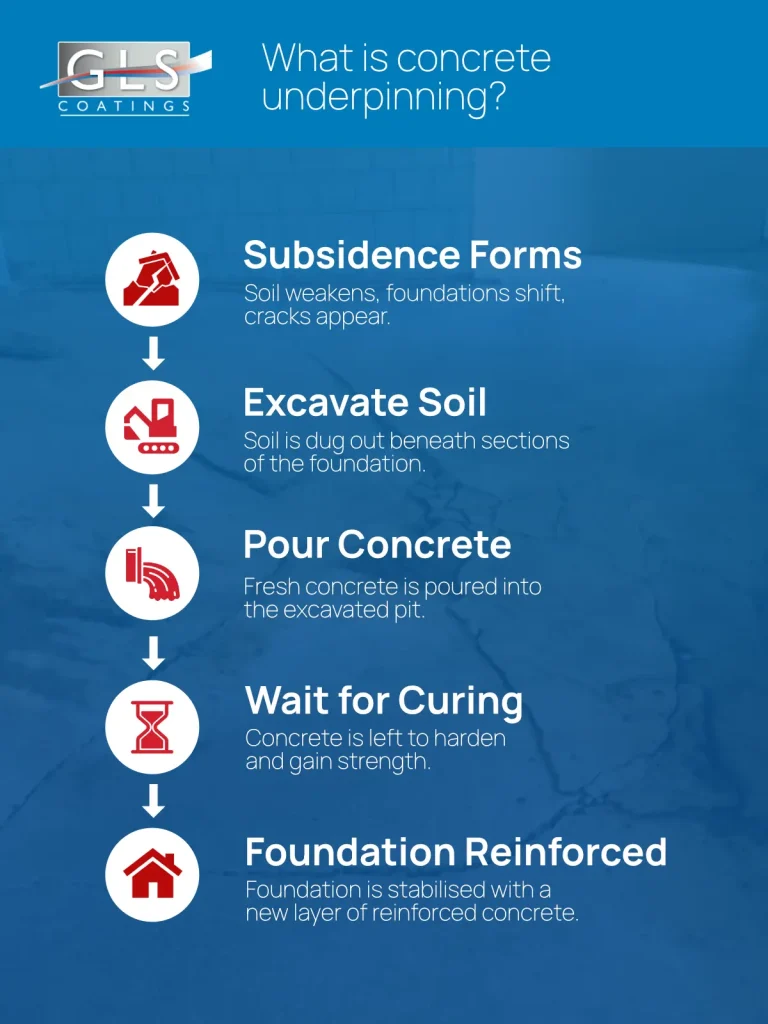
How it works:
- Soil beneath the existing foundation is carefully excavated in sections.
- Concrete is poured into the excavated areas.
- Once cured, the process is repeated until the entire foundation is supported by new concrete.
When it’s typically used:
- Severe or deep subsidence in residential properties.
- Factories or warehouses with very heavy loads.
- Multi-storey buildings, heritage stone structures, or infrastructure foundations such as bridges.
Advantages:
- Provides robust reinforcement for very deep or high-load cases.
- Suitable for the most serious structural problems.
- A long-established method that remains trusted by engineers and insurers in complex situations.
Limitations:
- Slow, often taking weeks due to excavation and curing.
- More expensive compared to resin injection.
- Highly disruptive, involving heavy digging, noise, and restricted access.
- Greater environmental impact due to large concrete volumes.
Key Differences Between Resin Injection and Concrete Underpinning
Both methods work, but they are suited to very different situations. Resin injection is ideal for stabilising homes, warehouses, and factories where minimal disruption is key, while concrete underpinning is reserved for the most severe cases such as bridges and multi-storey buildings that require maximum reinforcement.
| Factor | Resin Injection Underpinning | Concrete Underpinning |
|---|---|---|
| Cost | More affordable. Minimal excavation. Suited to homes, warehouses, moderate issues. | Higher cost. Excavation, curing, and labour make it expensive. |
| Speed | Very fast. Often done in one day. | Slow. Usually takes weeks. |
| Disruption | Minimal. No major digging, building often in use. | Major disruption. Heavy excavation and downtime. |
| Durability | Lasts decades. Newer method but proven effective. | Extremely durable. Used for over 100 years. |
| Suitability | Best for minor/moderate subsidence in homes, commercial, or industrial sites. | Best for severe/deep subsidence, multi-storey, factories, bridges. |
| Environmental Impact | Lower impact. Less material and lower emissions. | Higher impact. Large concrete use and excavation. |
Which Method is Right for Your Property?
The right choice depends on the severity and type of subsidence:
- Resin injection is ideal for:
- Minor to moderate foundation issues in homes.
- Warehouses or factories where work must continue during repairs.
- Properties needing quick stabilisation with minimal mess.
- Minor to moderate foundation issues in homes.
- Concrete underpinning is necessary for:
- Severe or deep subsidence in residential or commercial buildings.
- Factories or warehouses with very heavy loads.
- Multi-storey buildings, heritage stone structures, or infrastructure foundations such as bridges.
- Situations where very deep or heavy structural reinforcement is required.
- Severe or deep subsidence in residential or commercial buildings.
Every property is different. The best way to decide is through a professional site survey.
Need specific advice from our engineers?
Alternatives to Underpinning
Not every case requires underpinning. Sometimes other approaches may be more appropriate, such as:
- Improving site drainage.
- Managing or removing tree roots.
- Monitoring minor cracks over time.
These measures can help manage subsidence in certain situations. However, if damage is starting to show, such as visible cracks, sloping floors, or sticking doors, it is important to carry out a professional survey. This ensures the right solution is applied before the problem becomes more serious.
How much does resin injection underpinning cost?
Costs vary depending on the size of the property and extent of subsidence. Resin is typically cheaper than concrete underpinning, especially for houses and warehouses where large-scale excavation would be costly.
How long does resin injection underpinning last?
When applied correctly, resin solutions can last for decades.
Is resin injection cheaper than underpinning?
Yes, resin injection is generally more affordable due to reduced labour and faster installation, though pricing depends on the problem’s severity.
Does resin injection work for subsidence?
Yes, resin injection is a proven method for stabilising shallow to moderate subsidence in both residential and commercial properties.
What is the best underpinning method for my property?
It depends on soil type, severity of movement, and building requirements. A professional survey will confirm the best option.
Can subsidence be fixed without underpinning?
Yes, in some cases subsidence can be addressed through drainage improvements, vegetation management, or monitoring without underpinning.
Conclusion
Both resin injection and concrete underpinning are effective ways to stabilise foundations affected by subsidence. Resin injection offers a faster, cleaner, and often more affordable option for homes, warehouses, and factories with less severe issues. Concrete underpinning remains the specialist choice for the most serious structural problems, particularly for multi-storey, heritage, or industrial buildings requiring maximum reinforcement.
If you suspect subsidence, the first step is to book a professional inspection. This ensures you get the right solution for your home or building and peace of mind that your property is safe and secure for the future.
